Micro-business finance
Leja
Built by Asilimia
The M-Pesa fees that made a founder walk home
Tekwane Mwendwa co-founded Asilimia to take the fees out of mobile money for Nairobi’s small traders. Its app, Leja, turns small businesses’ daily sales into records that partner lenders can use.
- $2BB2B payments processed through Leja in 2024, the feature’s first yearCompany-reported, as of Dec 2024 · Source for $2B B2B payments processed through Leja in 2024, the feature’s first year
- 1.4M+micro, small and medium businesses onboarded in three years; active users not disclosedCompany-reported, as of Dec 2024 · Source for 1.4M+ micro, small and medium businesses onboarded in three years; active users not disclosed
- ~60%of Leja’s clients are women- or youth-led businessesCompany-reported, as of Dec 2024 · Source for ~60% of Leja’s clients are women- or youth-led businesses
- Founders
- Tekwane Mwendwa
- Morgane Kablan
- HQ
- Nairobi, Kenya
- Sector
- SME bookkeeping and payments
- Website
- Visit Leja
Born Capital is an investor in Leja.
The story
The fare home
Tekwane Mwendwa’s first deal was a goat. He was 18 and still in high school, growing up in a village near Mount Kilimanjaro, when he bought one at a market 20 kilometers away to butcher and sell. The herders had stuffed it with grass and water overnight so it weighed more, and some buyers in the village paid less than the meat was worth, or nothing. He lost on both ends. Years later in Nairobi, after closing an earlier startup, he was so short of cash that the M-Pesa charge on his last few shillings could decide whether he rode home or walked. In 2017 he paid a developer with his rent money. The result was Asilimia, an app that let small traders move mobile money without the fee.
A trader in Gikomba
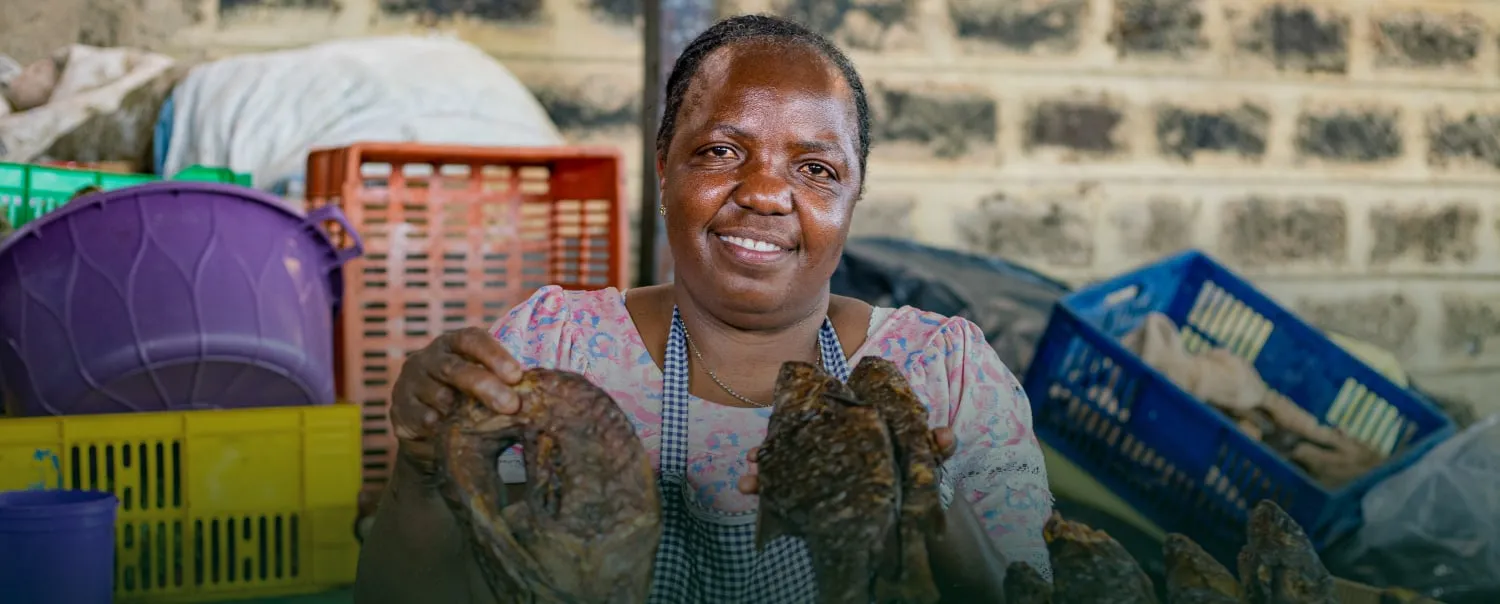
In 2019 Mwendwa traveled to Cape Town for a startup accelerator. That September Asilimia won the Africa Cup at the SA Innovation Summit, and with it an investment offer; the deal, worth about $350,000, closed in November. By 2020 the app had a following at Gikomba market in Nairobi. In April 2020, with COVID-19 spreading, Mwendwa wrote about Judy, a regular user there who was staying away from the market and whose sales had dropped sharply. Safaricom had made M-Pesa transfers below KES 1,000 free for 90 days, but Judy also paid her bills on M-Pesa, so she stayed with Asilimia. Mwendwa promised to keep Asilimia’s transfers free beyond those 90 days. In March 2021 the team launched Leja, a digital ledger for sales, expenses and money customers owe, with mobile money built in.
Records into credit
The ledger was the point. Most small businesses in Kenya are shut out of loans because they cannot show a lender a credit score, sales records or collateral. In November 2021 Asilimia raised $2 million, half equity and half debt. Asilimia’s apps then had about 27,000 users, and a typical user made around three transactions a day. The company planned to score borrowers on what the app already held: supplier payments, cash flow, sales, expenses and debts. Leja’s terms list three kinds of loans from partner lenders: airtime credit, instant loans paid to M-Pesa and loans that pay a supplier directly. Owners without smartphones can apply through a USSD code.
Two billion dollars
The larger flows came from trade between businesses. In 2024 Leja added B2B payments, so owners could pay suppliers and buy M-Pesa float in the app. By December it reported $2 billion in B2B payments processed that year and growth of about 30 percent month over month. It also said it had onboarded more than 1.4 million micro, small and medium businesses in three years, without saying how many were active. Only one user in ten used B2B payments; the company’s target was one in two. It also aimed to widen its lending reach from 5 to 20 percent, working with financial institutions and NGOs. The users have names. Peter pays his Nairobi restaurant staff in one batch. Paul, a shopkeeper, says Leja cut his transaction costs and gives him three free transfers under KES 1,000 a day.
The founders
Tekwane Mwendwa
Co-founder and CEO
Started out as an accountant at SISDO Kenya in 2011 and founded Active8 Kenya, a 3D modeling firm, in 2012, before building Asilimia from Nairobi.
Morgane Kablan
Co-founder
A French entrepreneur, she was Asilimia’s chief operating officer at the time of its 2021 raise.
Milestones
2017
Tekwane Mwendwa co-founds Asilimia in Nairobi to cut mobile money fees.
2019Nov
Closes a $350,000 investment after winning the SA Innovation Summit’s Africa Cup.
2021Mar
Launches Leja, a digital ledger with mobile money payments built in.
2021Nov
Raises $2 million, half equity and half debt, to extend credit to small businesses.
2023Jul
Named audience favorite at the Kenya edition of Visa’s Everywhere Initiative.
2024
Adds B2B payments, so owners can pay suppliers and buy M-Pesa float in the app.
Further reading
- We Are Tech Africa 2026Tekwane Mwendwa Builds Mobile Tools for Small Business Finance
- Business Daily Africa 2024Fintech startup Leja says processed Sh259bn MSME transactions
- Leja (company blog) 2024Founder’s Story: The Maverick
- TechCrunch 2021Kenyan fintech Asilimia raises $2 million in a pre-seed round, plans to extend loans to MSMEs and expand in East Africa
- Moringa School Podcast 2019Episode 009 - Asilimia - Making Mpesa Free ft. Tekwane Mwendwa and Julien Brinson
Next in the portfolio
Doublefin
Why a former Google finance director rebuilt headcount planning